ISLAMABAD: Pakistan is revising its 2023 bonded oil storage policy after failing to attract foreign oil suppliers to establish strategic petroleum reserves, exposing a critical weakness in the country’s energy security that became evident during the recent Iran-US conflict.
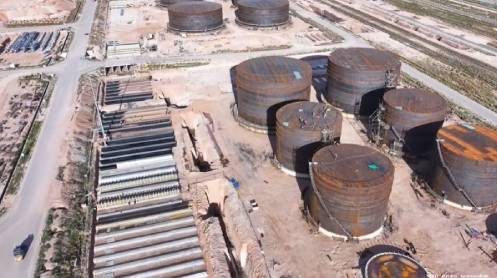
According to official sources, flaws in the existing policy discouraged international oil suppliers from investing in bonded storage facilities despite government efforts to encourage participation. The Petroleum Division is now finalising amendments aimed at creating a more investor-friendly framework.
The urgency of the reforms was highlighted during the recent disruption in the Strait of Hormuz, when Pakistan faced the risk of severe oil shortages. With nearly all of the country’s imported crude and petroleum products transiting through the strategic waterway, the temporary disruption underscored Pakistan’s vulnerability to regional geopolitical tensions.
Unlike several neighbouring countries, Pakistan lacks strategic petroleum reserves. India, for example, has established strategic storage facilities with support from the UAE, while Pakistan remains dependent on uninterrupted imports from Saudi Arabia, the UAE and Kuwait.
Petroleum Minister Ali Pervaiz Malik has approached major oil-producing countries to encourage investment in strategic storage facilities, with Kuwait emerging as the first country to express formal interest.
Under the proposed amendments, the government will retain the first right to access oil stored in bonded facilities during emergencies, while foreign suppliers will also be permitted to export oil from these reserves, making the investment commercially viable.
Sources revealed that land had previously been allocated to the UAE for the construction of the Khalifa Oil Refinery and associated storage facilities, but the project never materialised. The government is now seeking investment from Saudi Arabia, Kuwait and Qatar to establish strategic oil and gas storage infrastructure.
Pakistan had also explored developing underground gas storage in depleted gas fields, but the initiative failed to progress. During the recent regional conflict, the country also experienced gas supply concerns after LNG shipments from Qatar were disrupted due to the closure of the Strait of Hormuz.
The Petroleum Division informed the Economic Coordination Committee (ECC) that although the bonded storage policy was approved on June 26, 2023, not a single foreign supplier has established storage facilities under the existing framework.
To address these shortcomings, the petroleum minister constituted a high-level committee on May 7, 2026, to review the policy. After consultations with key petroleum traders and stakeholders, a revised draft policy has been prepared and circulated among relevant ministries for final comments before approval.
Pricing Formula Dispute Threatens $6 Billion Refinery Investment
At the same time, Pakistan’s downstream petroleum sector is facing growing uncertainty over repeated changes in the petroleum pricing mechanism, with industry leaders warning that inconsistent regulatory policies could jeopardise nearly $6 billion in planned refinery modernisation projects.
Oil Marketing Companies (OMCs) and refineries have accused the Oil and Gas Regulatory Authority (OGRA) of repeatedly altering the petroleum pricing formula and using disputed calculations involving international product premiums and Platts benchmark price averages.
Industry officials estimate that the cumulative financial impact has reached nearly Rs75 per litre on diesel and Rs35 per litre on petrol over the past month, with the resulting losses absorbed by refineries and fuel suppliers rather than being reflected in consumer prices.
According to industry executives, repeated revisions to the pricing methodology over the past several months have created significant uncertainty, undermining investor confidence and disrupting business planning.
“The issue is not the numbers but the consistency of their application,” a senior industry executive said, arguing that different methodologies are being used depending on whether international prices are rising or falling.
The concerns prompted chief executives of major OMCs and refineries to hold a high-level meeting with Petroleum Minister Ali Pervaiz Malik and Petroleum Secretary Hamed Yaqoob, seeking immediate government intervention.
Industry representatives also raised concerns over substantial delays in the release of Price Differential Claims (PDC), which they say are creating serious liquidity constraints across the sector.
Minister Malik maintained that the Petroleum Division had already transferred the required funds to OGRA and assured industry representatives that he would formally request the regulator to expedite pending payments.
Executives also warned that frequent policy shifts are alarming foreign investors who have recently entered Pakistan’s downstream petroleum sector, cautioning that regulatory uncertainty could discourage future investment in refinery upgrades, storage infrastructure and fuel supply networks.
The minister informed participants that Prime Minister Shehbaz Sharif has constituted a committee to review the petroleum pricing mechanism and develop a transparent, predictable and sustainable pricing framework.
Industry stakeholders stressed that regulatory consistency is essential for attracting long-term investment, warning that continued policy uncertainty could undermine Pakistan’s efforts to strengthen energy security and modernise its petroleum sector.
Analysts believe the twin challenges of inadequate strategic storage capacity and persistent pricing disputes underscore the urgent need for stable policies and long-term reforms to ensure Pakistan’s energy resilience and attract foreign investment.
Story by ZAFAR BHUTTA